
- Home
- International Programme
- Publications
- Colloquiums
- Seminars
- Blog
- IJATM
- Young Author Prize
What does Tata's acquisition of Iveco mean?
The weekly column by Bernard Jullien Former director of Gerpisa, associated professor at the University of Bordeaux.
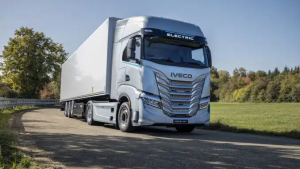
The Agnelli family's sale of Iveco to Tata Motors at the end of July is an important event that deserves greater attention. First and foremost, it marks the disappearance of a European player from the Italian heavy goods vehicle industry. It is also, and above all, the continuation of a very structural trend of selling European automotive assets to non-European investors, which is easy to understand but deeply damaging.
Tata Motors announced on July 30 that it was buying the civilian part of Iveco Group's business for €3.8 billion to acquire Iveco Group.
Tata Motors, which is remembered for the relationships it forged in 2007 with Fiat, has the full support of Iveco's board of directors for this transaction, particularly from the Agnelli family, through its investment company Exor, chaired by John Elkann. For Exor and the Agnelli family, the transaction comes at the end of a long process of restructuring the intertwined holdings that once made up the Fiat empire into separate, saleable entities.
This is how everything that was to be separated from the car manufacturer was housed within CNH Industrial (a Dutch entity formed by the merger of CNH Global, which corresponded to Case and New Holland in the United States, and Fiat Industrial, which was separated from Fiat Automobile in 2011). In 2022, Iveco Group was separated from CNH and Fiat Powertrain Industrial S.p.A (separated from FPT Auto a few years earlier) was integrated into it. The sale was ready.
Le Blog Auto opportunely reminds us that: “In 2021, China's FAW made an offer for Iveco. The Italian government then blocked the takeover.”
The press reported on the relief felt by the Italian and French governments: "The decision by the Chinese group FAW to abandon the takeover of Iveco-Heuliez is good news. This operation raised important issues of industrial sovereignty,“said French Economy Minister Bruno Le Maire, while his Italian counterpart indicated that the decision to end negotiations was welcomed ‘positively’ by the government of Mario Draghi, adding: ”We have followed the whole affair closely because the production of heavy road vehicles is of strategic national interest."
In 2025, the Italian government changed and, according to Le Blog Auto, “on the side of Prime Minister Giorgia Meloni, representatives welcome foreign investment” as if “China or India, it's obviously not the same for the government.” This is understandable given that there is no Indian equivalent of the Made in China 2025 plan and, more generally, no signs of a concerted, state-structured imperial enterprise. Nevertheless, there are reasons to wonder why an industry considered strategic in 2021 would cease to be so in 2025 and/or could be sold to an Indian player who has clearly stated his intention to form an integrated group logically headquartered in Mumbai.
Keen to win the approval of the government as well as Iveco's managers and employees, the management and shareholders of Tata Motors were quick to show their credentials and give Iveco all the guarantees it wanted. Tata Motors has given assurances that nothing will change in terms of employment, brand identity, the location and autonomy of the headquarters, European R&D, governance, or the sustainability of industrial sites. As reported by France Routes, Iveco is seeking to reassure: “The bidder (Tata Motors) is committed to supporting and accelerating Iveco's current strategy and to safeguarding the long-term interests of all Iveco stakeholders, including employees, suppliers, and customers.”
L'Argus is slightly less reassuring, stating: “For two years, employee rights will remain unchanged and no factory closures are planned. No job cuts are envisaged in the immediate future.”
Logically, these commitments and statements, which are fairly standard during the takeover of a company that is not bankrupt, do not completely reassure Iveco's 20,000 European employees and their trade unions. In Italy, the unions report “a climate of uncertainty.” In France, at the Annonay bus factory, the concern is more fundamental, and Steven Bethon, CGT representative, dares to ask the question: “Will the Indians try to take our know-how elsewhere tomorrow?”
In Vénissieux, the global decision-making center for the Iveco Bus and Heuliez brands, the business focuses on R&D and 450 jobs are at stake: will Tata Motors still consider them essential? Until when and for what projects? Decided where and by whom? The soothing words of the two management teams determined to make the merger a success cannot reassure them, just as they should not satisfy the governments that had previously spoken out against the takeover by FAW.
At a time when Europe is beginning to abandon its naivety in trade policy and is now daring to increase customs duties and seriously considering formulating local content requirements, as is done almost everywhere else in the world, the Iveco case raises the question of the freedom given to non-European investors to buy up European assets.
In China, “screening” is institutionalized and transactions can be blocked, but many are authorized. To stick to recent cases in France, it should be noted that GMD is in the process of being acquired by the Chinese group DSBJ if the French, German, Moroccan, and European authorities approve the procedure, but both employees and authorities are still awaiting clarification of the industrial plans.
As for Safra, a company with 169 employees in receivership since February and the only French manufacturer of hydrogen buses, it was taken over in May by the Chinese group Wanrun, at the helm of the Albi Commercial Court.
As noted in a 2021 study on these “filters” supposed to embody the “end of naivety,” “when Chinese expansion meets European bankruptcies”, as was the case between 2008 and 2010, tolerance for foreign direct investment (FDI) increases significantly.
The main danger in 2025 is primarily of this nature: the situation of overcapacity in Europe, the slowness with which decisions are made to support and protect our equipment industry from the deadly purchasing policies of manufacturers, and the contrast between their situation as Europeans and that of their Indian or Chinese counterparts create a context in which the most attractive buyers for commercial courts and employees are often the latter.
The guarantees offered are of limited credibility. Industrial projects are vague or completely fictitious, but they have the cash and the alternatives are non-existent or even more problematic. From this point of view, Indian players are not to be outdone, and we remember the disaster that was Ruia's takeover of Sealynx (sealing and supplier to Renault mainly) and Preciturn (bar turning) in 2011.
In the automotive industry, as was the case with Nissan's Barcelona plant, which was sold to Chery, it may be tempting, if overcapacity persists, to sell plants to Chinese or Indian buyers rather than close them. This would certainly be less painful socially, but it would maintain overcapacity and facilitate the penetration of non-European manufacturers into Europe. As in the equipment sector, there is therefore every reason to limit such operations as much as possible.
Returning to Tata's takeover of Iveco, this may initially be a cause for concern for Iveco: if we take the case of Jaguar Land Rover, which was bought from Ford in 2008, as a reference, there are a number of reasons to doubt the group's ability to successfully run European operations from Mumbai. Supporters of the deal can take comfort from the example of Volvo, where, in the early years of the takeover, it seemed that Geely was giving the Swedes the means to restore their brand's power and identity, which Ford had deprived them of. Gradually, however, Geely took control and, with the shift to electric vehicles, imposed a much more Chinese range, symbolized by the EX30.
This could then cause concern for the European heavy goods vehicle industry, which, with Volvo Trucks, Mercedes, Traton, and Iveco, has until now been largely European and dominant in Europe and beyond. The former RVI employees know from experience what initial promises are worth when Swedish decisions are involved. This is the experience that Iveco in Europe can expect to go through, and the Italian heavy goods vehicle industry will then resemble our own.
La chronique de Bernard Jullien est aussi sur www.autoactu.com.
The weekly column by Bernard Jullien is also on www.autoactu.com.

User login
Navigation
Agenda
|
Journée du Gerpisa
Thursday, 12 February, 2026 - 14:00 - 16:00
|
|
Journée du Gerpisa
Friday, 13 February, 2026 - 14:00 - 16:00
|
|
Journée du Gerpisa
Friday, 13 March, 2026 - 14:00 - 16:00
|
|
Journée du Gerpisa
Friday, 10 April, 2026 - 09:00 - 17:00
|
|
Colloque du Gerpisa
Monday, 15 June, 2026 - 08:00 - Thursday, 18 June, 2026 - 18:00
|


